

How to Stop Losing Your Erection Mid-Sex

An erection can soften during sex even when attraction and desire are present. It may happen during a position change, after attention shifts, when anxiety appears, or when the body is tired. One experience does not automatically mean that a person has erectile dysfunction or that something is wrong with the relationship.
When the problem happens repeatedly, however, it can create a frustrating cycle. A person notices the erection changing, begins monitoring it, becomes anxious, and finds it even harder to stay aroused. Understanding the possible causes can help reduce panic and make it easier to decide whether practical changes, communication, or medical support may be appropriate.
Key Takeaways
- Erections can change during sex because of psychological, physical, medication-related, and relationship factors
- Worrying about erection firmness can pull attention away from pleasurable sensations and intensify performance pressure
- Slower breathing, continued stimulation, and a less rigid view of sexual success may make it easier to remain present
- Recurring erection difficulties may be connected to cardiovascular health, medications, alcohol use, stress, or other medical factors
- A healthcare provider can help determine whether lifestyle changes, psychological support, prescription treatment, or a combination may be appropriate

Why Can an Erection Fade During Sex?
An erection depends on communication among the brain, nerves, hormones, blood vessels, and erectile tissue. Sexual stimulation contributes to signals that allow the smooth muscle within penile blood vessels to relax, increasing blood flow into the penis.
A comprehensive review of erectile dysfunction mechanisms explains that erectile difficulties can involve vascular, neurological, hormonal, medication-related, psychological, and relationship factors. More than one factor may be present at the same time.
Losing an erection occasionally is different from repeatedly being unable to get or maintain an erection firm enough for satisfying sexual activity. A recurring pattern deserves a medical evaluation, particularly when it represents a new or unexplained change.
Psychological and Situational Factors
The mind and body are closely connected during sexual activity. Stress, anxiety, distraction, fear of disappointing a partner, and previous difficult experiences can all affect attention and arousal.
A review of psychological factors in male sexual dysfunction describes erectile dysfunction as a complex interaction among biological, psychological, and contextual variables. This means anxiety may contribute to erection difficulties even when physical factors are also present.
Common situational triggers include:
- Monitoring whether the erection is firm enough
- Worrying that a previous problem will happen again
- Feeling pressure to satisfy a partner
- Becoming distracted by work, finances, family, or other concerns
- Feeling self-conscious about appearance or sexual experience
- Experiencing relationship tension or difficulty communicating
- Rushing because of limited time or privacy
None of these automatically proves that anxiety is the sole cause. They are possible contributors that should be considered alongside physical health.
Physical and Medical Factors
Erectile function can also be affected by:
- Cardiovascular and blood-vessel health
- Diabetes, high blood pressure, or high cholesterol
- Hormonal conditions
- Neurological disorders
- Fatigue or poor general health
- Alcohol or other substance use
- Prescription medication side effects
- Pain or discomfort during sex
- Reduced stimulation during pauses or position changes
A review of the diagnosis and management of erectile dysfunction identified associations with factors including cardiovascular disease, diabetes, hypertension, obesity, depression, and lack of exercise. Because erectile dysfunction can sometimes be associated with broader health concerns, persistent symptoms should not simply be dismissed as nervousness.

Change How You Respond When an Erection Softens
The first few moments after noticing a change can influence what happens next. Panic and self-criticism may intensify pressure, while a calmer response can leave room for arousal to return.
Treat the Change as Information, Not Failure
An erection changing does not mean that sex is over or that a partner is unattractive. It may mean that stimulation changed, attention drifted, the body needs more time, or the person is feeling tense.
Instead of thinking:
“This is happening again. Everything is ruined.”
Try:
“My erection changed. We can slow down and continue in another way.”
This response does not guarantee that the erection will return. It does reduce the pressure created by treating every change as an emergency.
Separate Pleasure From Penetration
When an erection becomes the only measure of whether sex is successful, every fluctuation can feel like a crisis. Intimacy can continue through kissing, touching, oral sex, manual stimulation, conversation, or simply taking a pause together.
Helpful reminders include:
- An erection does not need to remain equally firm throughout every sexual encounter
- Penetration and orgasm are not the only possible goals
- A pause does not mean either partner has failed
- Both partners can suggest a different activity
- Either person can stop or change direction at any time
Reducing the sense that one physical response must determine the entire encounter can make sex feel less like a performance.
Use Breathing to Reduce Physical Tension
When anxiety appears, breathing may become fast or shallow. Deliberately slowing the breath can provide a simple point of focus and may reduce short-term physical arousal.
A study of slow diaphragmatic breathing and anxiety examined how breathing rate and the relationship between inhalation and exhalation affected state anxiety during a single breathing session. The findings support slow breathing as a possible short-term strategy, although the study did not specifically examine sexual performance.
Try a Longer, Comfortable Exhale
During a pause:
- Inhale gently through the nose
- Exhale slowly without forcing the breath
- Let the exhale last slightly longer than the inhale
- Repeat several times at a comfortable pace
- Return attention to touch, sound, and physical sensation
There is no need to hold the breath or follow a rigid count. Stop if the exercise causes dizziness or makes anxiety worse.
Slow breathing should not be described as a direct treatment for erectile dysfunction. Its role is to help reduce tension and bring attention back to the present moment.
Move Attention Away From Erection Monitoring
Constantly checking erection firmness can make a person feel like an observer rather than a participant. This type of self-monitoring is sometimes called spectatoring.
Questions such as these may begin to dominate:
- Am I still hard enough?
- Does my partner notice?
- How long will this last?
- What happens if I lose it completely?
- Am I disappointing them?
Instead of repeatedly checking the erection, choose one physical sensation and focus on it:
- The warmth of your partner's skin
- The pressure of their hand
- The feeling of kissing
- The sound of breathing
- The movement of your own body
- The sensation of being touched
Adjust Pacing and Stimulation
An erection may soften when stimulation decreases, particularly during a long pause or position change. Rather than rushing to complete the transition, maintain consensual contact and communicate about what feels effective.
Practical options include:
- Continue kissing or touching while changing positions
- Ask for more direct stimulation
- Guide your partner's hand rather than expecting them to guess
- Return temporarily to an activity that was previously arousing
- Slow down instead of trying to force penetration
- Use lubricant if friction or discomfort is interrupting arousal
- Take a short break without treating the break as the end of sex
These suggestions are not guaranteed medical treatments. They are ways to maintain connection and reduce the pressure surrounding a temporary change.
Talk to Your Partner Before the Next Encounter
Trying to explain erection concerns for the first time while feeling embarrassed can be difficult. A conversation outside the bedroom may make it easier for both partners to agree on how to respond.
A study examining sexual and nonsexual communication explored relationships among communication, sexual satisfaction, and relationship satisfaction in couples. The findings were observational and do not prove that communication alone resolves erection difficulties, but they support treating sexual concerns as shared topics rather than private failures.
How to Start the Conversation
Consider saying:
- “Sometimes I get focused on whether I will stay hard, and that makes it difficult to stay present.”
- “I want us to handle it without making either of us feel blamed.”
- “It helps when we slow down and continue touching instead of stopping completely.”
- “Can I show you the kind of stimulation that works best for me?”
- “I would like us to treat it as a temporary change rather than a disaster.”
What to Say During Sex
Keep the language brief and direct:
- “Can we slow down?”
- “Keep touching me like that.”
- “Let us stay here for a minute.”
- “Can we go back to what we were doing before?”
- “My body needs a moment, but I still want to be close.”
- “Would you like to try something else?”
Avoid repeatedly apologizing. Acknowledging what is happening and suggesting a next step is usually more useful than turning the encounter into an extended discussion about failure.
Know When to Seek a Medical Evaluation
Consider speaking with a healthcare provider when erection loss:
- Happens during most sexual encounters
- Continues for several weeks or months
- Represents a sudden change from previous function
- Occurs during masturbation as well as partnered sex
- Is accompanied by reduced desire, pain, curvature, or loss of sensation
- Began after starting or changing a medication
- Causes significant anxiety or relationship distress
- Occurs alongside cardiovascular symptoms or other health changes
A clinician may ask about medical history, sexual function, medications, alcohol and substance use, mental health, and relationship factors. Depending on the situation, evaluation may also involve blood pressure measurement, laboratory testing, or other assessments.
When Psychological Support May Help
When erection loss is strongly connected to anxiety, fear of failure, relationship tension, or previous difficult experiences, counseling may be useful.
In a randomized study comparing counseling, sildenafil, and combined treatment, men with psychogenic or mixed erectile dysfunction were assigned to counseling, sildenafil, or both. The study evaluated sexual satisfaction and treatment response, providing support for considering both medical and psychological factors rather than assuming every patient needs the same approach.
A qualified therapist may help with:
- Performance anxiety
- Catastrophic thinking
- Body-image concerns
- Sexual communication
- Relationship conflict
- Trauma-related reactions
- Fear caused by previous erection difficulties
The most appropriate approach depends on the individual's symptoms, medical history, and preferences.
When Prescription Treatment May Be Appropriate
Prescription erectile dysfunction medication may help eligible patients improve their ability to get and maintain an erection. It is intended to address erectile function, not anxiety itself.
Medication does not eliminate the need for sexual stimulation, communication, or medical evaluation. It also does not resolve relationship conflict, trauma, body-image concerns, or broader anxiety disorders.
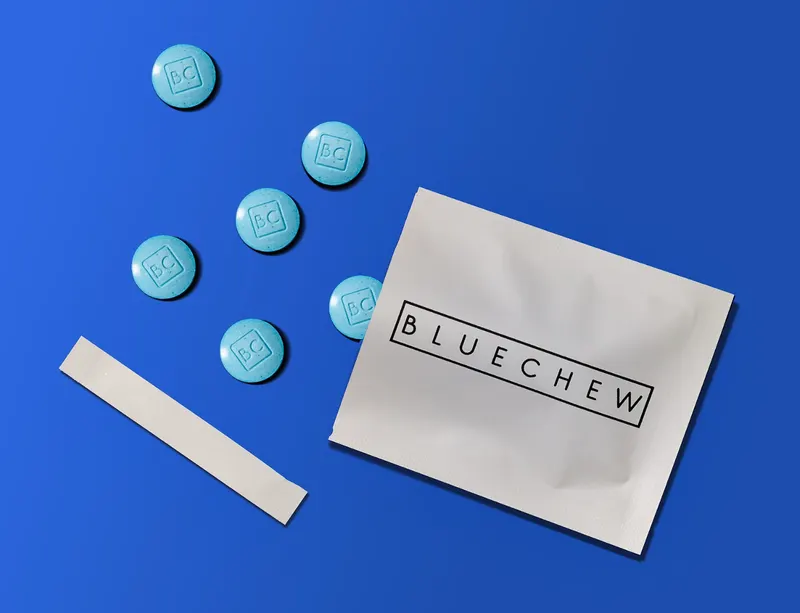
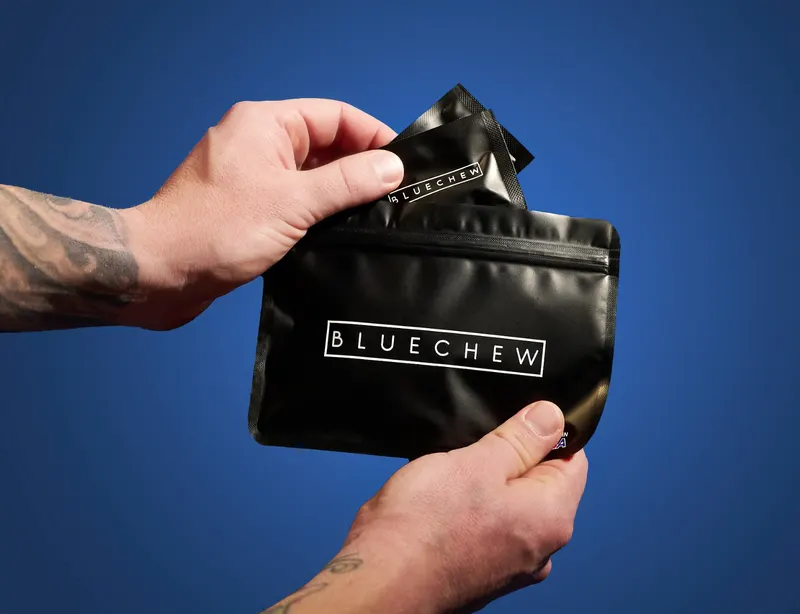
BlueChew is a telemedicine service that connects patients with licensed medical providers. A provider reviews the patient's health information and may prescribe a compounded erectile dysfunction medication when medically appropriate.
BlueChew Treatment Options
DailyTAD comes in a chewable tablet. SIL, TAD, VAR, MAX, VMAX, and GOLD are available as sublingual tablets.
BlueChew’s complete product lineup includes:
- SIL: 45 mg sildenafil, from $3.53/tablet, works in 15 minutes, lasting up to 6 hours
- TAD: 9 mg tadalafil, from $4.47/tablet, effective within 15 minutes, lasting up to 36 hours
- VAR: 8 mg vardenafil, from $4.34/tablet, takes effect in 15 minutes, lasting up to 6 hours
- DailyTAD: 9 mg tadalafil plus 7 essential vitamins, $2.23/tablet, lasting up to 36 hours
- MAX: 45 mg sildenafil + 18 mg tadalafil combo, $5.63/tablet, lasting up to 36 hours
- VMAX: 14 mg vardenafil + 18 mg tadalafil combo, $5.63/tablet, lasting up to 36 hours
- GOLD: sildenafil, tadalafil, oxytocin, and apomorphine sublingual tablet, from $7.30/tablet, lasting up to 36 hours
Patients should review BlueChew's important safety information and provide their healthcare provider with a complete list of health conditions, prescriptions, over-the-counter medications, and supplements.
How To Get Medication Through BlueChew
Interested in getting a prescription for treatment? BlueChew has got you covered.
Select a plan, complete an online intake, and you're done. A medical provider will review your information and, if appropriate, prescribe your plan, which will be shipped directly to your door.
No doctor appointments or patient support charges make it a stress-free experience.
Plus, there is no commitment. You can easily cancel or switch plans anytime. Click here to explore all treatment plan options at BlueChew.
Frequently Asked Questions
Is it normal to lose an erection during sex occasionally?
An occasional change in erection firmness can happen for many reasons, including distraction, stress, reduced stimulation, fatigue, or alcohol use. One episode does not automatically mean that a person has erectile dysfunction. A recurring pattern, especially one that causes distress or represents a new change, should be discussed with a healthcare provider.
Can anxiety cause an erection to fade?
Anxiety can contribute to erection difficulties by increasing self-monitoring and shifting attention away from sexual stimulation. However, anxiety is only one possible factor. Cardiovascular health, medications, hormones, neurological conditions, alcohol use, and relationship concerns may also contribute. Persistent symptoms require a broader evaluation rather than an assumption that they are entirely psychological.
What should someone say to a partner when it happens?
A brief, calm explanation may reduce pressure. A person might say, “My body needs a moment, but I still want to be close,” or ask to return to a form of touch that feels more stimulating. Discussing the issue outside the bedroom can also help both partners agree on how to respond without blame or panic.
Can changing positions help maintain an erection?
A position change may help when it increases comfort or stimulation, but there is no universally effective position. The transition itself may briefly reduce stimulation or increase distraction. Continuing consensual touching, communicating clearly, and avoiding rushed penetration may make the transition feel less disruptive.
How can someone tell whether medication may be appropriate?
A licensed healthcare provider should determine whether prescription treatment is appropriate. Medication may be considered when erection difficulties are recurring and medical review identifies erectile dysfunction. The provider should also evaluate health conditions, medication interactions, contraindications, and psychological or relationship factors that may require additional support.
This article is provided for informational purposes only and does not constitute medical advice. The information presented is not a substitute for professional medical advice, diagnosis, or treatment. Always consult your healthcare provider to discuss the risks, benefits, and appropriateness of any treatment.
BlueChew offers access to healthcare providers who may prescribe compounded medications for the treatment of erectile dysfunction.
The featured products include compounded medications that have not been approved by the FDA. Compounded medications may be prescribed under federal law but are not the same as, nor are they generic versions of, any FDA-approved medication. The FDA does not review compounded medications for safety, effectiveness, or manufacturing quality of compounded products. A prescription will only be written if deemed appropriate after the digital consultation by the licensed medical provider. Individual results may vary.
BlueChew is not a compounding pharmacy but a telemedicine service that links patients to licensed medical providers.