Stem Cell Therapy for ED: Promise vs. Reality
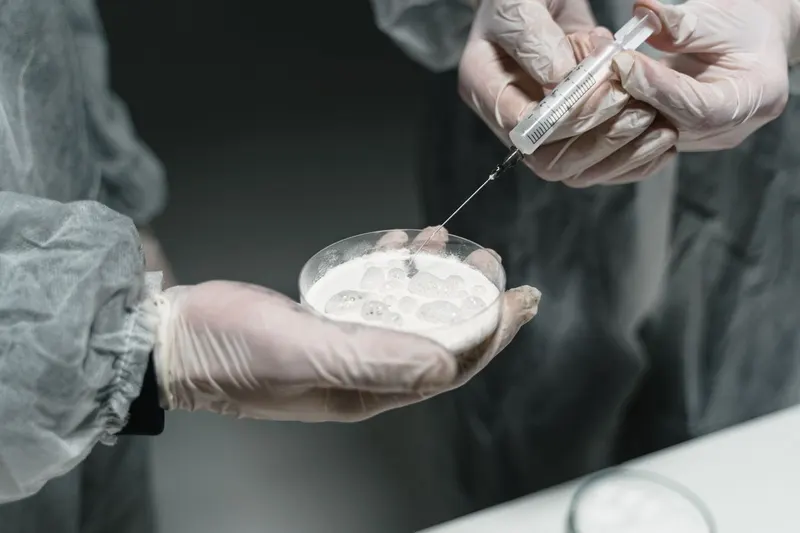
Stem cell and related cell-based therapies are being investigated as possible treatments for erectile dysfunction, but they are not established ED treatments. The term covers several cell preparations, collection methods, processing methods, doses, and injection protocols that should not be treated as medically equivalent.
A randomized double-blind, placebo-controlled trial evaluated one intracavernous injection of autologous adipose-derived regenerative cells in 70 men with erectile dysfunction after radical prostatectomy. The treatment did not produce a significant improvement over placebo in erectile-function questionnaire scores, erection-hardness scores, or RigiScan measurements. The treatment could not be recommended in the form evaluated.
That result applies to the specific cell preparation, injection procedure, and post-prostatectomy population studied. It does not establish that every future cell-based approach will produce the same result. It does show why preliminary findings should not be presented as evidence of a permanent cure, predictable tissue regeneration, or routine clinical effectiveness.
Key Takeaways
- Stem cell and related cell-based therapies for ED remain investigational
- Cell products, preparation methods, doses, and treatment protocols differ substantially
- One adipose-derived regenerative-cell protocol did not outperform placebo after radical prostatectomy
- Earlier studies reported possible improvements, but many involved small or uncontrolled patient groups
- BlueChew does not provide cell therapy or claim to regenerate erectile tissue

What “Stem Cell Therapy” Can Mean
The phrase “stem cell therapy” is often used as though it refers to one standardized medical product. It does not.
A systematic review of cell therapy for male sexual dysfunctions found substantial differences among the published human studies. The review included multiple cell sources, processing methods, patient groups, doses, and treatment protocols. Most of the included publications were small case series, and only a limited number used randomized controlled designs.
Procedures described as cell therapy may involve:
- Adipose-derived regenerative cells
- Stromal vascular fraction
- Mesenchymal stromal or stem cells
- Bone marrow-derived cells
- Umbilical cord-derived cells
- Placental cell preparations
- Mixed cell populations
- Cultured or expanded cells
- Cells obtained from the patient
- Donor-derived cells
The preparation used in one study may differ from another in its cellular composition, processing, viability, dose, and administration method.
Stromal vascular fraction, for example, is a mixed preparation containing several cell types. It should not automatically be described as a purified stem-cell product.
A result involving freshly isolated adipose-derived regenerative cells cannot be transferred automatically to cultured mesenchymal cells, donor-derived products, or a clinic’s proprietary formulation.
What the Placebo-Controlled Trial Found
The placebo-controlled trial enrolled men with erectile dysfunction following radical prostatectomy. Half received adipose-derived regenerative cells, and half received a placebo injection.
The trial found no significant difference between the groups in:
- International Index of Erectile Function-5 scores
- Erection Hardness Scale scores
- RigiScan tumescence measurements
- RigiScan rigidity measurements
No severe adverse events were observed during the trial. Minor effects included temporary reactions related to tissue collection or injection.
These safety findings apply only to the procedure and follow-up period evaluated. They do not establish universal or long-term safety for every cell source, processing method, dose, clinic, or patient.
The participants also had ED following prostate surgery. The findings should not be presented as direct evidence about diabetic ED, primarily vascular ED, medication-related ED, Peyronie’s disease, or every other cause of erectile dysfunction.

What the Broader Comparison Found
A systematic review and network meta-analysis of regenerative therapies for erectile dysfunction compared stem-cell therapy, platelet-rich plasma, and low-intensity shockwave therapy.
The estimated effect for stem-cell therapy had a wide credible interval that crossed the point of no effect. This means the analysis did not establish a statistically reliable improvement over control treatment.
The included studies also differed in:
- Patient populations
- Comparison groups
- Treatment protocols
- Follow-up periods
- Concurrent PDE5 inhibitor use
- Regenerative interventions
- Outcome measurements
The review concluded that additional research was needed to determine whether stem-cell therapy improves erectile function.
These differences make it inappropriate to interpret the pooled result as proof that all cell-based procedures work or that they all fail.
What the Stem-Cell Meta-Analysis Found
A systematic review and meta-analysis focused specifically on clinical studies of intracavernous stem-cell therapy for ED.
The systematic review included 11 studies, while the quantitative analysis included six studies with a combined total of 75 treated patients. Most of the included studies reported improvements from baseline in at least one erectile-function measurement.
However, the analysis had major limitations:
- Most studies were early-phase investigations
- Several studies had no control group
- Patient groups were small
- Only one included study used a randomized controlled design
- Cell sources and doses varied
- Administration protocols were inconsistent
- Causes of ED differed
- Follow-up periods varied
- Most pooled results compared patients with their own baseline measurements
An improvement from baseline does not prove that the treatment caused the change. Without an adequate control group, expectations, natural variation, concurrent care, or measurement effects may also influence the result.
The meta-analysis concluded that larger randomized trials with longer follow-up were needed and that stem-cell therapy was not ready for widespread clinical use.
Why the Results Appear Mixed
The published findings can appear contradictory because the studies do not evaluate the same products, patients, procedures, or outcomes.
Small uncontrolled studies may report improvements after treatment. A placebo-controlled trial asks a different question: whether the treatment performs better than a comparison intervention under controlled conditions.
Other important differences include:
- The cause of ED
- The type of cell preparation
- The number of cells administered
- Whether cells were freshly isolated or cultured
- Whether the preparation contained multiple cell types
- The injection technique
- The number of treatments
- Continued use of other ED therapies
- The questionnaire or measurement used
- The follow-up period
- Whether participants and investigators were blinded
These differences prevent one result from proving that every cell-based therapy is effective or ineffective.
Current Clinical Position
The systematic review of male sexual dysfunctions concluded that the available cell-therapy evidence was limited by low-quality studies, substantial methodological variation, uncertainty about the size of any benefit, and insufficient long-term information.
Its clinical position statements recommended that:
- Cell therapy should remain under investigation
- Treatment should not be offered outside ethics-approved clinical trials
- Patients should be told that effectiveness and safety evidence remains limited
- Possible benefits should be discussed alongside uncertainty
- The potential size and duration of any effect should not be overstated
- Adverse effects and procedural risks should be discussed before participation
This conclusion is based on a systematic review of human clinical studies, providing a broader and more reliable assessment of the available evidence.
Questions to Ask Before Considering Cell Therapy
Someone considering an experimental cell-based ED procedure can ask:
- What exact cell product is being administered?
- Is it a purified cell population or a mixed preparation?
- Are the cells obtained from the patient or a donor?
- How are the cells collected and processed?
- Are the cells expanded in a laboratory?
- Has this exact procedure been compared with placebo?
- Was my specific cause of ED included?
- How many people received the treatment?
- What outcomes were measured?
- How long were participants followed?
- Were the findings published as a complete peer-reviewed study?
- What adverse events occurred?
- Who manages complications?
- What happens if the procedure does not help?
- Is the procedure part of an ethics-approved clinical trial?
- Which established ED treatments have already been evaluated?
Testimonials, before-and-after stories, and descriptions of proprietary technology do not provide the same information as a complete clinical publication.
Marketing Claims to Approach Carefully
Stem cell therapy for ED is still being evaluated, so promotional language should reflect the uncertainty surrounding its effectiveness, durability, and long-term safety. Claims that suggest predictable or permanent results go beyond what has been demonstrated in human clinical studies.
Be cautious when a clinic describes its treatment using phrases such as:
- A permanent cure for ED
- Guaranteed improvement or success
- Complete regeneration of erectile tissue
- Proven repair of penile nerves
- Proven formation of new blood vessels
- No risk of rejection, complications, or treatment failure
- Effective treatment for every cause of ED
- Freedom from all future ED medication
- Clinically proven without naming the supporting study
- Inherently safe because the cells come from the patient
- An established treatment despite limited controlled evidence
Responsible providers should explain which exact cell product is being used, what type of clinical study evaluated it, how many patients were treated, and whether the results were compared with a placebo or control group. They should also discuss the possibility that treatment may not help and acknowledge that findings from one experimental protocol may not apply to another.

Established Treatment Options for ED
A review of the management of erectile dysfunction identifies PDE5 inhibitors as first-line treatment for most patients.
PDE5 inhibitors include:
- Sildenafil
- Tadalafil
- Vardenafil
- Avanafil
Other clinician-directed options may include:
- Intracavernosal injections
- Vacuum erection devices
- Intraurethral medication
- Penile prosthesis surgery
- Counseling or sex therapy when appropriate
- Management of contributing medical conditions
Treatment selection may depend on:
- The pattern and severity of ED
- Current prescriptions
- Relevant medical conditions
- Cardiovascular health
- Previous treatment response
- Possible medication interactions
- Patient preferences
- Psychological or relationship factors
- The suspected cause of ED
A limited response to one medication does not establish that experimental cell therapy is the appropriate next step. A provider can first review how the medication was used and whether another established treatment should be considered.
How BlueChew Fits Into the Discussion
BlueChew is a telemedicine service that connects patients with licensed healthcare providers who may prescribe compounded medications for erectile dysfunction when medically appropriate.
BlueChew does not:
- Offer stem-cell injections
- Provide stromal vascular fraction treatment
- Claim to regenerate erectile nerves
- Claim to rebuild erectile tissue
- Claim to cure erectile dysfunction
- Replace in-person care when an examination or testing is needed
- Guarantee that a prescription will work for every patient
Someone seeking ED treatment through BlueChew completes a digital medical intake. A medical provider reviews the submitted information and determines whether a prescription is appropriate.
Patients should disclose:
- Current and previous ED treatments
- Current prescriptions and supplements
- Relevant medical conditions
- Blood-pressure or cardiovascular concerns
- Previous pelvic or prostate procedures
- Any cell-based or experimental treatment received
- Complications from previous procedures
- Previous medication side effects
BlueChew Product Options
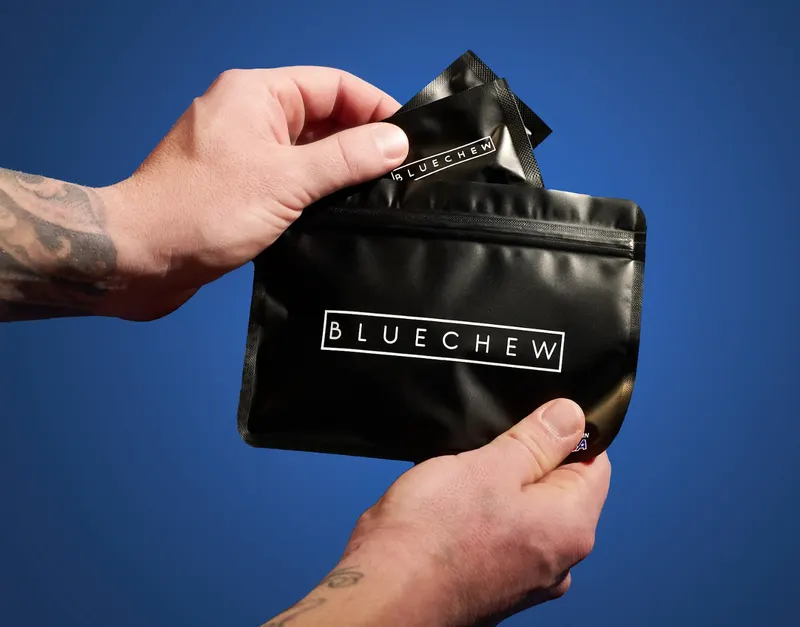
- SIL: 45 mg sildenafil, from $3.53/tablet, works in 15 minutes, lasting up to 6 hours
- TAD: 9 mg tadalafil, from $4.47/tablet, effective within 15 minutes, lasting up to 36 hours
- VAR: 8 mg vardenafil, from $4.34/tablet, takes effect in 15 minutes, lasting up to 6 hours
- DailyTAD: 9 mg tadalafil plus 7 essential vitamins, $2.23/tablet, lasting up to 36 hours
- MAX: 45 mg sildenafil + 18 mg tadalafil combo, $5.63/tablet, lasting up to 36 hours
- VMAX: 14 mg vardenafil + 18 mg tadalafil combo, $5.63/tablet, lasting up to 36 hours
- GOLD: sildenafil, tadalafil, oxytocin, and apomorphine sublingual tablet, from $7.30/tablet, lasting up to 36 hours
The appropriate product, formulation, and dose depend on the licensed provider’s assessment.
BlueChew medications do not contain stem cells. They should not be described as regenerative treatments or as repairing erectile nerves, blood vessels, smooth muscle, or other tissue.
How To Get Medication Through BlueChew
Interested in getting your hands on a prescription for BlueChew GOLD? BlueChew has got you covered.
Select a plan, complete an online intake, and you’re done. A medical provider will review your information and, if appropriate, prescribe your plan, which will be shipped directly to your door.
No doctor appointments or patient support charges make it a stress-free experience.
Plus, there’s no commitment—you can easily cancel or switch plans anytime.Click here to explore all plan options for treatments at BlueChew.

Frequently Asked Questions
Is stem cell therapy an established treatment for ED?
No. Cell-based therapies for erectile dysfunction remain investigational. The available procedures use different products, doses, processing methods, and patient groups. Results from one procedure cannot be applied automatically to another. Routine effectiveness has not been established.
What did the placebo-controlled trial find?
The trial evaluated one injection of autologous adipose-derived regenerative cells in men with ED after radical prostatectomy. It found no significant improvement over placebo in erectile-function, erection-hardness, or RigiScan outcomes. The conclusion applies to that protocol and patient population. It should not be expanded into a conclusion about every possible future cell product.
Why have some earlier studies reported improvement?
Many earlier investigations were small, open-label, or lacked placebo groups. These designs cannot reliably separate a treatment effect from expectations, natural variation, other care, or measurement effects. They may identify a possible signal that deserves further investigation. They do not establish routine clinical effectiveness.
Can stem cell treatment permanently cure ED?
Current human evidence does not establish a permanent cure. No standardized cell product, dose, processing method, or treatment schedule has been shown to restore natural erections reliably. Long-term durability also remains uncertain. Permanent-result guarantees are not supported.
What established options can be considered instead?
A healthcare provider can review prescription medication, injection treatment, vacuum devices, intraurethral medication, penile implants, counseling, and management of contributing conditions. The appropriate option depends on the possible cause of ED, medical history, current prescriptions, previous treatment response, and patient preferences. Experimental cell therapy should not replace evaluation of established care.
This article is provided for informational purposes only and does not constitute medical advice. The information presented is not a substitute for professional medical advice, diagnosis, or treatment. Always consult your healthcare provider to discuss the risks, benefits, and appropriateness of any treatment.
BlueChew offers access to healthcare providers who may prescribe compounded medications for the treatment of erectile dysfunction.
The featured products include compounded medications that have not been approved by the FDA. Compounded medications may be prescribed under federal law but are not the same as, nor are they generic versions of, any FDA-approved medication. The FDA does not review compounded medications for safety, effectiveness, or manufacturing quality of compounded products. A prescription will only be written if deemed appropriate after the digital consultation by the licensed medical provider. Individual results may vary.
BlueChew is not a compounding pharmacy but a telemedicine service that links patients to licensed medical providers.
Other Helpful Articles