
Shockwave Therapy for ED: What the Evidence Shows

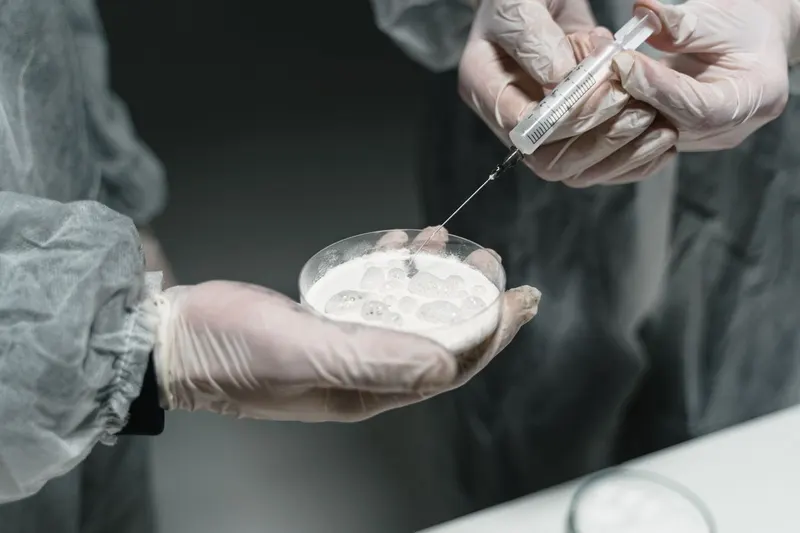
Low-intensity shockwave therapy is an emerging procedure studied for erectile dysfunction. It delivers acoustic energy to penile tissue using an external device, with the goal of influencing biological processes involved in erectile function.
A comprehensive review of low-intensity shockwave therapy found that treatment may produce modest improvements in some measures of erectile function. However, the certainty of the evidence was low because the studies used different devices, treatment schedules, patient populations, and outcome measures.
These findings make shockwave therapy scientifically interesting, particularly for vascular forms of ED. They do not establish it as a reliable cure, a standardized treatment, or a replacement for established ED care.
Key Takeaways
- Low-intensity shockwave therapy delivers acoustic energy to penile tissue through a noninvasive, clinic-based procedure
- A review of low-intensity shockwave therapy found possible improvements in erectile function, but the overall certainty of the evidence was low
- Treatment protocols differ substantially in device type, energy settings, pulse count, treatment sites, session frequency, and total number of sessions
- Current evidence does not establish that shockwave therapy regenerates penile tissue, restores normal erectile function, or provides a permanent cure for ED
- The American Urological Association’s erectile dysfunction guideline classifies shockwave therapy as investigational and notes that it is not FDA-approved specifically for ED

What Is Shockwave Therapy for ED?
Low-intensity shockwave therapy, sometimes abbreviated as LiSWT or Li-ESWT, is a noninvasive procedure that directs acoustic waves toward penile tissue.
A handheld applicator is placed against several areas of the penis. The device then delivers a predetermined number of pulses at selected energy settings.
The treatment does not use the same high-intensity energy applied to break apart kidney stones. ED studies evaluate substantially lower energy levels intended to influence tissue without destroying it.
Researchers have investigated whether this acoustic energy might affect:
- Blood-vessel signaling
- Endothelial function
- Penile blood flow
- Cellular responses to mechanical energy
- Tissue responses associated with vascular ED
These remain proposed or investigational mechanisms. A biological response observed in laboratory research does not prove that treatment will restore natural erections or correct the underlying cause of ED in a particular patient.
How the Procedure Is Performed
Shockwave therapy is generally performed in an outpatient clinic.
During a session, a clinician applies a treatment probe to selected areas, which may include:
- The penile shaft
- The base of the penis
- The erectile bodies
- The crura near the pelvic attachment of the penis
The exact procedure depends on the device and clinic protocol.
Published studies have varied in:
- Number of pulses delivered
- Energy applied per pulse
- Number of treatment sites
- Sessions performed each week
- Total number of sessions
- Length of the treatment course
- Use of medication during the study
- Follow-up period
There is no single treatment protocol that has been accepted as the standard for ED.
A clinic recommending a specific schedule should be able to explain which published protocol it follows and whether that research involved a comparable device and patient population.
Why Treatment Protocols Matter
The phrase “shockwave therapy” can refer to procedures that are not technically identical.
Energy can be generated through systems such as:
- Electrohydraulic devices
- Electromagnetic devices
- Piezoelectric devices
Differences in energy generation affect how the waves travel through tissue and where the energy is concentrated.
Treatment results may also depend on:
- Energy flux density
- Pulse frequency
- Number of pulses
- Probe placement
- Tissue depth
- Treatment interval
- Total treatment exposure
These differences make it difficult to compare one clinic’s service with a protocol used in a published trial.
Receiving the same number of sessions does not establish that two procedures deliver the same treatment.

Does Shockwave Therapy Restore Natural Erections?
Some clinics describe shockwave therapy as regenerative or as a way to restore spontaneous erectile function.
Current clinical evidence does not establish that the procedure:
- Permanently creates new penile blood vessels
- Removes plaque from penile arteries
- Regenerates damaged erectile nerves
- Reverses diabetes-related vascular damage
- Restores tissue affected by prostate surgery
- Eliminates the future need for ED medication
- Cures every form of vascular ED
- Returns erectile function to a normal level
The American Urological Association’s erectile dysfunction guideline notes that randomized trials have not clearly shown a reliable return to normal erectile function.
Some participants may experience improvement. That is different from demonstrating tissue regeneration or a cure.
How Long Might the Results Last?
The duration of any benefit remains uncertain. One study examining whether shockwave therapy was a durable treatment option followed a small group after an earlier randomized trial.
Average erectile-function scores remained improved at 12 and 24 months. By 36 months, the average improvement was smaller and was no longer statistically significant compared with baseline.
Important limitations included:
- A small participant group
- Treatment at one institution
- Use of one device and protocol
- Combining the original treatment and crossover groups
- Loss of some participants during follow-up
The study suggests that improvement may continue for a period after treatment in some patients. It does not establish that benefits routinely last two years or that repeat treatment will reliably restore the initial response.
Claims promising a fixed duration should therefore be interpreted cautiously.
Is Shockwave Therapy FDA-Approved for ED?
The American Urological Association’s erectile dysfunction guideline identifies low-intensity extracorporeal shockwave therapy as investigational and notes that it is not FDA-approved for treating ED.
Some shockwave-generating devices may be cleared for other medical purposes. Clearance of a device for another use does not establish that it has been reviewed or approved specifically for erectile dysfunction.
Patients should ask a clinic:
- Which device is being used?
- What is the device cleared to treat?
- Is the ED procedure being offered as part of a clinical trial?
- Which study evaluated that exact device?
- Does the clinic follow the same treatment protocol?
- How are results measured?
- What happens when treatment does not help?
The regulatory status of the device and the evidence supporting its use for ED are separate questions.
Potential Risks and Side Effects
The Cochrane review found little to no difference in reported treatment-related adverse events between shockwave therapy and sham treatment.
Published studies generally described few serious complications during the follow-up periods evaluated.
Possible temporary effects may include:
- Local discomfort
- Skin sensitivity
- Redness
- Mild swelling
- Bruising
The short-term safety findings are reassuring, but the certainty of the evidence remains low.
Current research is less able to define:
- Rare complications
- Risks associated with repeated treatment courses
- Long-term tissue effects
- Differences among devices
- Effects of nonstandard energy settings
- Risks when treatment is performed by inadequately trained personnel
A low reported complication rate does not mean that every device, provider, or protocol has the same safety profile.
Questions to Ask Before Treatment
Anyone considering shockwave therapy should receive clear information about the device, protocol, evidence, and expected outcome.
Useful questions include:
- Is the treatment investigational?
- Is it part of a registered clinical trial?
- Which device will be used?
- How does that device generate acoustic energy?
- Which published trials evaluated that device?
- What energy settings will be used?
- How many pulses are delivered per session?
- How many sessions are recommended?
- What evidence supports that schedule?
- Which types of ED were included in the supporting studies?
- How will improvement be measured?
- What happens if there is no response?
- Are maintenance sessions recommended?
- What evidence supports repeat treatment?
- What are the total costs?
- Which established ED options have also been discussed?
Testimonials should not replace controlled clinical evidence.
Shockwave Therapy Compared With PDE5 Inhibitors
Shockwave therapy and PDE5 inhibitors use different approaches.
Shockwave Therapy
Shockwave therapy:
- Uses externally delivered acoustic energy
- Requires clinic-based procedures
- Does not provide an immediate on-demand effect
- Uses protocols that vary among providers
- Has low-certainty evidence
- Remains investigational under current AUA guidance
PDE5 Inhibitors
PDE5 inhibitors:
- Are prescription medications
- Include sildenafil, tadalafil, vardenafil, and avanafil
- Support the nitric oxide and cyclic GMP pathway
- Are used in connection with sexual stimulation
- Have established prescribing and safety guidance
- Can be selected according to medical history and treatment preferences
Current recommendations on the management of erectile dysfunction identify PDE5 inhibitors as first-line pharmacological treatment for most patients.
That does not mean medication works for everyone or that shockwave research lacks value. It reflects the larger and more mature clinical evidence supporting PDE5 inhibitors.
Where BlueChew Fits Into the Discussion
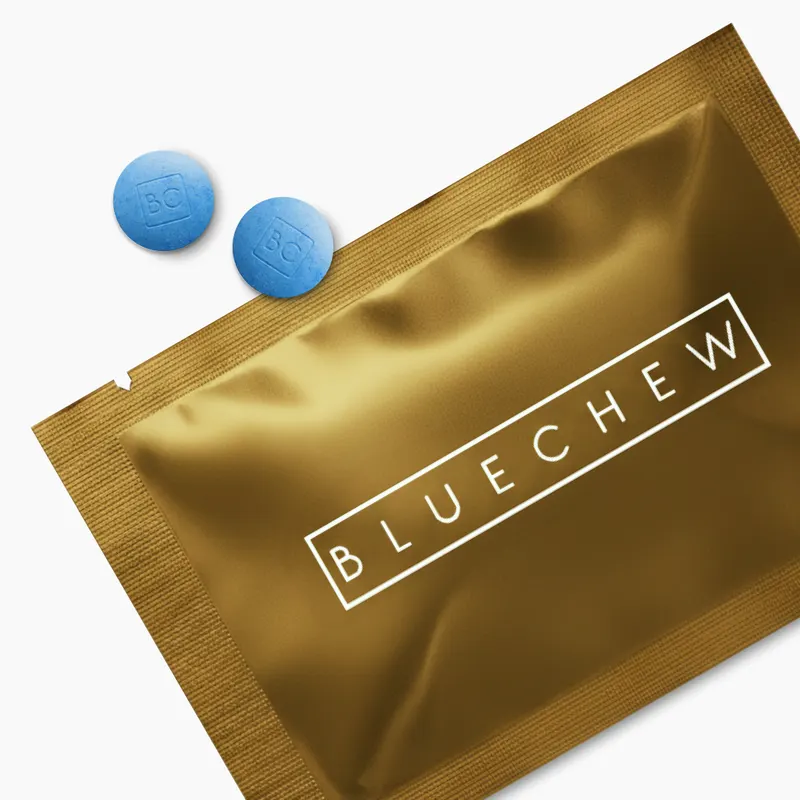
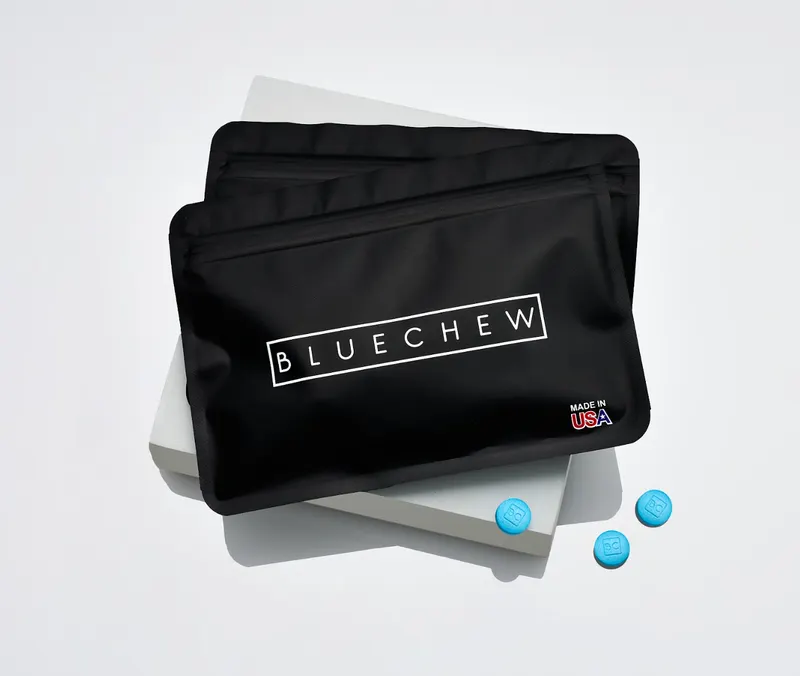
BlueChew is a telemedicine service that connects patients with licensed healthcare providers who may prescribe compounded ED medication when medically appropriate.
BlueChew does not provide shockwave therapy. Its role is limited to provider-reviewed access to prescription medication for ED.
Someone seeking treatment through BlueChew completes a digital medical intake. A provider reviews the submitted health information before determining whether a prescription is appropriate.
Relevant information may include:
- Current and previous ED treatment
- Prescription medications and supplements
- Cardiovascular and blood-pressure history
- Other medical conditions
- Previous medication reactions
- Use of shockwave therapy
- Previous pelvic or prostate surgery
- Penile pain or curvature
- Changes in sexual desire, orgasm, or ejaculation
Some symptoms or medical histories may require an in-person examination, laboratory testing, or referral to another healthcare professional.
BlueChew Product Options
- SIL: 45 mg sildenafil, from $3.53/tablet, works in 15 minutes, lasting up to 6 hours
- TAD: 9 mg tadalafil, from $4.47/tablet, effective within 15 minutes, lasting up to 36 hours
- VAR: 8 mg vardenafil, from $4.34/tablet, takes effect in 15 minutes, lasting up to 6 hours
- DailyTAD: 9 mg tadalafil plus 7 essential vitamins, $2.23/tablet, lasting up to 36 hours
- MAX: 45 mg sildenafil + 18 mg tadalafil combo, $5.63/tablet, lasting up to 36 hours
- VMAX: 14 mg vardenafil + 18 mg tadalafil combo, $5.63/tablet, lasting up to 36 hours
- GOLD: sildenafil, tadalafil, oxytocin, and apomorphine sublingual tablet, from $7.30/tablet, lasting up to 36 hours
Product availability and plan options may vary. The licensed healthcare provider determines whether a prescription, formulation, active ingredient, and dose are appropriate.
These medications should be evaluated separately from shockwave therapy. They do not reproduce its proposed tissue effects, and shockwave therapy has not been shown to improve or replace a prescribed medication response.
How To Get Medication Through BlueChew
Interested in getting your hands on a prescription for BlueChew GOLD? BlueChew has got you covered.
Select a plan, complete an online intake, and you’re done. A medical provider will review your information and, if appropriate, prescribe your plan, which will be shipped directly to your door.
No doctor appointments or patient support charges make it a stress-free experience.
Plus, there’s no commitment—you can easily cancel or switch plans anytime. Click here to explore all plan options for treatments at BlueChew.
Frequently Asked Questions
Does shockwave therapy work for erectile dysfunction?
Clinical trials suggest that shockwave therapy may modestly improve some erectile-function questionnaire scores. Other outcomes, including erection hardness, successful intercourse measures, and penile blood-flow measurements, have not improved consistently. The certainty of the overall evidence remains low because studies use different devices and treatment protocols. Shockwave therapy is therefore considered investigational rather than an established treatment.
How many shockwave sessions are needed for ED?
There is no universally accepted treatment schedule. Published studies have used different numbers of sessions, pulses, treatment sites, energy settings, and intervals. A clinic’s recommended course may not match the protocol evaluated in a successful trial. The provider should explain which research supports the exact schedule being offered.
Are the results of shockwave therapy permanent?
Current evidence does not establish a permanent effect. A small follow-up study found that average improvements continued for a period after treatment but became less clear by the third year. Other studies have used shorter follow-up periods and different protocols. Claims of a permanent cure or guaranteed treatment duration are unsupported.
Is shockwave therapy FDA-approved for ED?
Low-intensity shockwave therapy is not currently FDA-approved specifically for treating erectile dysfunction. The American Urological Association classifies it as investigational. A shockwave device may have regulatory clearance for another medical purpose without being cleared for ED. Patients should ask the clinic about the device’s exact regulatory status and supporting evidence.
Can shockwave therapy be combined with ED medication?
Some research protocols have evaluated shockwave therapy in people who use or previously responded to PDE5 inhibitors. There is no standardized combined-treatment protocol that applies to every patient. A healthcare provider should review current medication, health history, previous response, and the proposed shockwave procedure. Shockwave therapy should not be assumed to improve the effectiveness of prescription medication.
This article is provided for informational purposes only and does not constitute medical advice. The information presented is not a substitute for professional medical advice, diagnosis, or treatment. Always consult your healthcare provider to discuss the risks, benefits, and appropriateness of any treatment.
BlueChew offers access to healthcare providers who may prescribe compounded medications for the treatment of erectile dysfunction.
The featured products include compounded medications that have not been approved by the FDA. Compounded medications may be prescribed under federal law but are not the same as, nor are they generic versions of, any FDA-approved medication. The FDA does not review compounded medications for safety, effectiveness, or manufacturing quality of compounded products. A prescription will only be written if deemed appropriate after the digital consultation by the licensed medical provider. Individual results may vary.
BlueChew is not a compounding pharmacy but a telemedicine service that links patients to licensed medical providers.