How to Recover Libido After Starting SSRIs

You took an important step for your mental health, and your antidepressant may be helping. Your mood may feel more stable, your anxiety may feel more manageable, or daily life may feel easier to navigate.
But somewhere along the way, you may have noticed a change in your sex drive. If an SSRI has helped your mental health but affected your desire, arousal, orgasm, or erectile function, you are not alone.
SSRI sexual side effects are a known issue. These effects can include decreased desire, delayed orgasm, difficulty with arousal, reduced genital sensitivity, and erectile difficulties. Estimates vary, but SSRI-related sexual side effects are common enough that they are an important topic to discuss with a healthcare provider.
The good news is that you do not have to make decisions on your own. With medical guidance, communication, and the right support, many people find ways to manage sexual side effects while continuing to prioritize their mental health.
Key Takeaways
- SSRI-related libido changes are common and are not something to feel embarrassed about.
- Never stop, skip, or change your antidepressant dose without talking to your prescriber.
- Exercise, sleep, stress management, and alcohol moderation may help support sexual wellness.
- Open communication with your partner can reduce pressure and help you work through changes together.
- If erectile function or sexual performance concerns are part of the issue, the BlueChew GOLD option may be worth discussing with a licensed provider.

Understanding Why SSRIs May Affect Libido
SSRIs work through serotonin reuptake inhibition, which increases serotonin signaling in the brain. This can help with depression and anxiety symptoms for many people, but serotonin also interacts with systems involved in sexual response.
Sexual desire is not controlled by one chemical or one body system. It involves mood, stress, hormones, blood flow, relationship context, and neurotransmitters such as serotonin and dopamine. Reviews of antidepressant sexual dysfunction note that medication-related sexual side effects can involve several overlapping mechanisms rather than one simple cause.
Common SSRI-related sexual effects may include:
- Lower interest in sex
- Less spontaneous desire
- Difficulty becoming physically aroused
- Delayed orgasm
- Difficulty reaching orgasm
- Reduced genital sensitivity
- Erectile difficulties
These changes do not mean something is wrong with you or your relationship. They can be medication-related, and they are worth discussing with the clinician who prescribed your SSRI.
Why This Can Affect Relationships
Sex can be an important part of emotional closeness for many couples. When desire changes unexpectedly, one partner may feel confused while the other may feel guilty, pressured, or frustrated.
It can help to name the issue clearly: SSRI-related sexual side effects are physiological, not a reflection of attraction or commitment. Once both partners understand that, the conversation can shift away from blame and toward problem-solving.
For many couples, the goal is not to force desire back overnight. It is to create a lower-pressure path back to connection.
A Helpful Mindset: Both Mental Health and Sexual Health Matter
One of the hardest parts of SSRI-related libido changes is the feeling that you have to choose between mental wellness and sexual wellness. That is not always the case.
Instead, it may help to think of the issue as something to manage with support. Your antidepressant may be helping your mental health, while other strategies may help support your sexual health.
Helpful reframes include:
- “My medication is helping one part of my health, and I can ask for help with another part.”
- “This is something to discuss with my prescriber, not something I need to solve alone.”
- “My partner and I can stay connected while we figure out what works.”
- “Sexual wellness is a valid part of overall well-being.”
Start With Your Prescriber
Your first step should be a conversation with the healthcare provider who prescribed your SSRI. They can help you weigh options based on your mental health history, current symptoms, medication dose, side effects, and overall health.
Questions to ask may include:
- Could the timing of my dose affect sexual side effects?
- Is a dosage adjustment worth discussing?
- Are there alternative antidepressants that may have fewer sexual side effects for me?
- Would an additional medication be appropriate?
- Could therapy, lifestyle changes, or relationship counseling help alongside medication?
Some prescribers may discuss options such as changing the dose, switching medications, or adding another medication. For example, bupropion sexual dysfunction research has looked at bupropion as an option for some people with SSRI-related sexual dysfunction because it works differently from SSRIs.
Never stop your SSRI suddenly or change your dose without medical guidance. Abrupt medication changes can cause antidepressant discontinuation symptoms, worsen mood or anxiety, or make symptoms harder to manage.

Lifestyle Factors That May Support Sexual Desire
Lifestyle changes may not fully reverse SSRI-related sexual side effects, but they can support the systems involved in desire, arousal, energy, and confidence.
Exercise
Regular movement may help support circulation, mood, body confidence, and stress regulation. Research on exercise and erections has also studied the relationship between physical activity and erectile function. You do not need an intense routine to start. Walking, strength training, swimming, cycling, dancing, or sports can all be useful if they are sustainable.
Sleep
Poor sleep can affect energy, mood, hormones, and desire. If your libido changed after starting an SSRI, sleep may not be the only cause, but it can make the issue feel worse. Prioritizing consistent sleep and addressing sleep problems with a healthcare provider may help.
Stress Management
Stress can make it harder to feel present, relaxed, or responsive during intimacy. Breathing exercises, therapy, meditation, time outdoors, journaling, or simple daily walks may help lower stress levels over time.
Alcohol Moderation
Alcohol can affect arousal, erection quality, orgasm, and sleep. If you drink, reducing alcohol intake may help you better understand what is medication-related and what may be influenced by lifestyle.
Nutrition
A balanced diet supports energy, cardiovascular health, and overall wellness. There is no single food that reliably restores libido after starting SSRIs, but consistent nutrition can help support the broader foundation for sexual health.
Rediscovering Arousal
When spontaneous desire decreases, responsive desire may become more important. Spontaneous desire is the feeling of wanting sex seemingly out of nowhere. Responsive desire develops after emotional closeness, touch, stimulation, or an intimate setting. Research on responsive sexual desire often distinguishes between desire that appears spontaneously and desire that builds in response to context or stimulation.
If spontaneous desire has changed, that does not mean intimacy is gone. It may mean your body needs more time, less pressure, and different cues.
Approaches to try include:
- Planning intimate time instead of waiting for desire to appear on its own
- Extending foreplay and allowing more time for arousal
- Focusing on touch, closeness, and pleasure without making orgasm the only goal
- Trying new settings, pacing, or forms of intimacy
- Taking breaks when pressure starts to build
- Talking about what feels good now, not only what used to work
The goal is to create conditions where desire has room to build.
How to Talk With Your Partner
Talking about libido changes can feel vulnerable, but honest communication often reduces misunderstanding. A partner may assume the change is about attraction, when it may be related to medication, stress, or mental health recovery.
You could say:
“I want to talk about something I’ve noticed since starting my medication. It has been helping my mental health, but my desire for sex has changed. This is not about my attraction to you. I want us to work through it together.”
To reassure your partner, you could say:
“I still want closeness with you. My body and brain may just need more time, more patience, or a different kind of approach right now.”
To invite collaboration, you could say:
“Can we take the pressure off and explore what feels good for both of us? I think it would help if we approached this as a team.”
This kind of conversation can help shift the issue from a private source of shame to a shared health concern.
When to Consider Additional Support
If you have already addressed sleep, stress, exercise, communication, and medication questions with your prescriber but still feel stuck, it may be time to ask about additional support.
Depending on your situation, this may include:
- A medication review with your prescriber
- Therapy or sex therapy
- Couples counseling
- Evaluation for erectile dysfunction
- Screening for hormone, cardiovascular, or other health factors
- Discussion of prescription treatment options when appropriate
SSRI-related sexual side effects can involve desire, arousal, orgasm, and erectile function. That means the right support may look different from person to person.

Addressing the Brain-Body Connection
Sexual function involves both mental and physical factors. SSRIs may affect desire or orgasm for some people, while stress about performance can add another layer. Erectile function also depends on blood flow, nerve signaling, arousal, and overall health.
For people experiencing SSRI-related sexual side effects, the BlueChew GOLD option may be worth discussing with a licensed provider if erectile function, arousal, or sexual performance concerns are part of the issue.
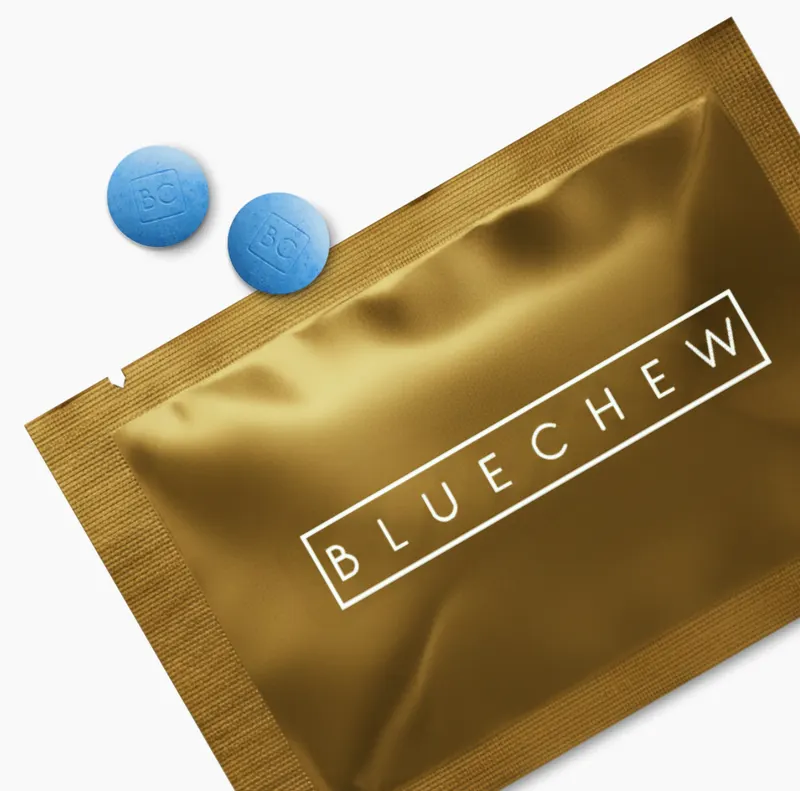
GOLD is a compounded sublingual tablet that contains sildenafil, tadalafil, apomorphine, and oxytocin. Sildenafil for ED is used in the management of erectile dysfunction, and tadalafil is also part of the PDE5 inhibitor medication class. Apomorphine for ED has been studied as a sublingual treatment option for erectile dysfunction, while oxytocin and intimacy have been studied in relation to sexual response, bonding, and intimacy-related pathways.
This does not mean GOLD is a guaranteed solution for SSRI-related libido changes. It means the combination may be relevant to discuss with a licensed provider when erectile function or sexual performance concerns are part of the broader issue.
You can also learn more about expected use considerations in the GOLD timing guide.

How BlueChew Can Help
BlueChew offers access to licensed healthcare providers who may prescribe compounded medications for erectile dysfunction and sexual performance enhancement after an online provider review.
BlueChew Product Options
- SIL: 45 mg sildenafil, from $2.95/tablet, works in 15 minutes, lasting up to 6 hours
- TAD: 9 mg tadalafil, from $3.58/tablet, effective within 15 minutes, lasting up to 36 hours
- VAR: 8 mg vardenafil, from $4.34/tablet, takes effect in 15 minutes, lasting up to 6 hours
- DailyTAD: 9 mg tadalafil plus 7 essential vitamins, $2.23/tablet, lasting up to 36 hours
- MAX: 45 mg sildenafil + 18 mg tadalafil combo, $5.63/tablet, lasting up to 36 hours
- VMAX: 14 mg vardenafil + 18 mg tadalafil combo, $5.63/tablet, lasting up to 36 hours
- GOLD: sildenafil, tadalafil, oxytocin, and apomorphine sublingual tablet, from $7.30/tablet, lasting up to 36 hours
SIL, VAR, TAD, MAX, VMAX, and GOLD are available as sublingual tablets. DailyTAD comes in a chewable tablet.
How To Get BlueChew GOLD
BlueChew GOLD is a prescription compounded sublingual medication option for eligible patients after an online provider review.
To get started, select a plan and complete an online intake. A licensed medical provider will review your information and, if appropriate, prescribe BlueChew GOLD as part of your treatment plan.
BlueChew also gives subscribers the option to manage your account, switch, or cancel their plan as needed.
View treatment plans to explore treatment plan options at BlueChew.

Frequently Asked Questions
How long do SSRI sexual side effects typically last?
It varies. Some people notice improvement within weeks as their body adjusts to the medication. Others experience sexual side effects for as long as they take the SSRI. In some cases, symptoms may persist after stopping, which is why it is important to discuss changes with a healthcare provider rather than making medication changes on your own.
Can I stop taking my SSRI if the sexual side effects are too much?
Do not stop or change your SSRI dosage without consulting your prescriber. Stopping suddenly can cause withdrawal-like symptoms and may lead to a return or worsening of depression or anxiety symptoms. If sexual side effects are affecting your quality of life, your provider can discuss options such as dose timing, dosage changes, switching medications, or additional treatment.
Can lifestyle changes reverse SSRI-related libido changes?
Lifestyle changes may help support sexual wellness, but they may not fully resolve medication-related side effects for everyone. Exercise, sleep, stress management, nutrition, and reduced alcohol intake can support mood, energy, circulation, and arousal. If symptoms continue, talk with your prescriber.
Will BlueChew interact with my SSRI?
BlueChew’s licensed medical providers review your health information, including current medications, before prescribing. Be sure to disclose all medications, supplements, and health conditions during the consultation. Some medication combinations or health conditions require caution, and a provider can help determine whether treatment is appropriate.
Is it normal to feel guilty about wanting sex while dealing with mental health issues?
Yes. Many people feel conflicted when they are working on their mental health and also want to address sexual side effects. Sexual wellness is a valid part of overall well-being. Wanting support for libido, arousal, orgasm, or erectile function does not make your mental health treatment less important.
This article is provided for informational purposes only and does not constitute medical advice. The information presented is not a substitute for professional medical advice, diagnosis, or treatment. Always consult your healthcare provider to discuss the risks, benefits, and appropriateness of any treatment.
BlueChew offers access to healthcare providers who may prescribe compounded medications for the treatment of erectile dysfunction.
The featured products include compounded medications that have not been approved by the FDA. Compounded medications may be prescribed under federal law but are not the same as, nor are they generic versions of, any FDA-approved medication. The FDA does not review compounded medications for safety, effectiveness, or manufacturing quality of compounded products. A prescription will only be written if deemed appropriate after the digital consultation by the licensed medical provider. Individual results may vary.
BlueChew is not a compounding pharmacy but a telemedicine service that links patients to licensed medical providers.
Other Helpful Articles